For nearly a decade, the Quick Response (QR) code was largely viewed as a technological gimmick—a clumsy concept that required users to download a third-party scanning app just to view a static webpage. However, recent years have forced a universal behavioral shift. Within months, scanning a QR code using a native smartphone camera became a globally understood, second-nature action.
In the event photography industry, this behavioral shift has unlocked an unprecedented opportunity for high-speed media distribution.
If you are shooting a large corporate gala, a luxury wedding, or a college festival, your primary bottleneck is not capturing the photos; it is connecting the final, edited image with the specific guest who wants it. The traditional "Push" methods—relying on the client to email a standard cloud storage link to their attendees—fail spectacularly, often resulting in high abandonment rates.
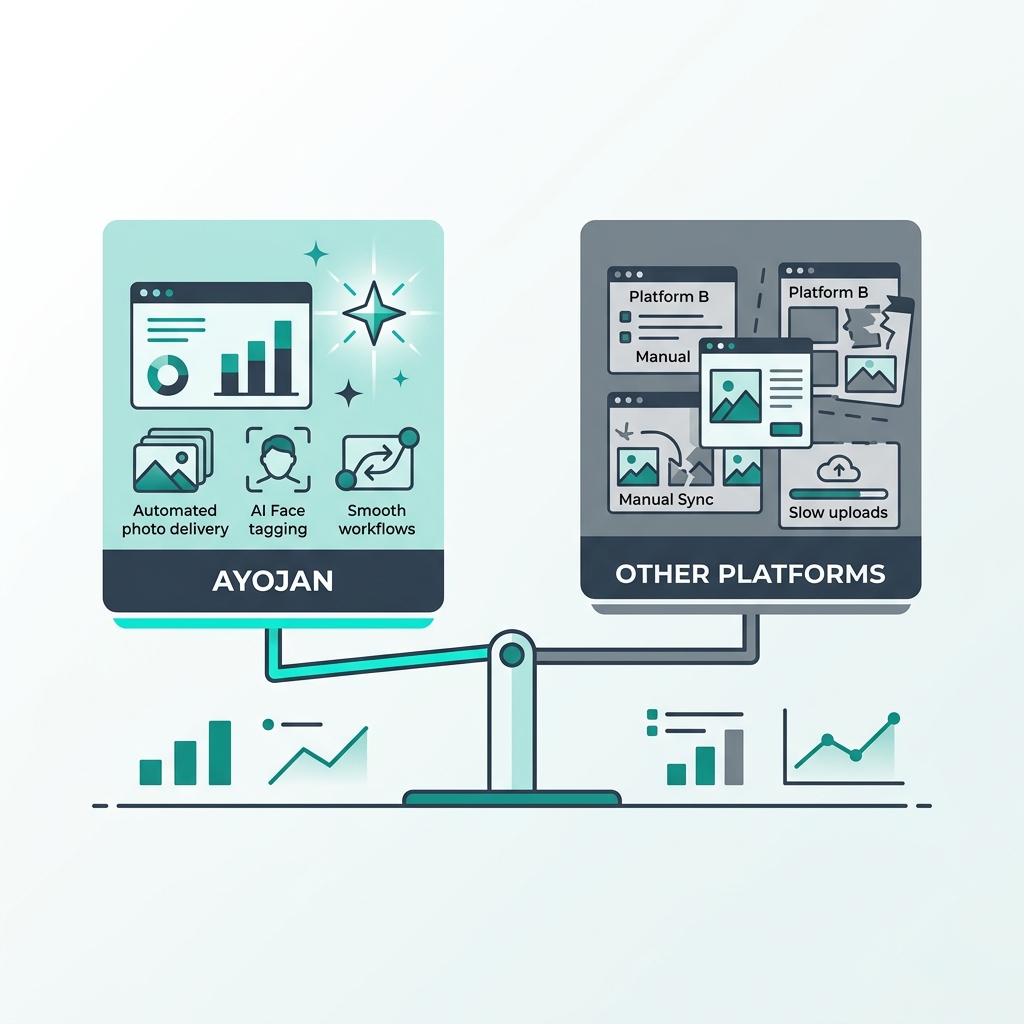
By integrating the QR code directly with an AI-driven, biometric facial recognition database like Ayojan, you can completely solve the distribution bottleneck.
This guide explores the friction of media delivery, the architectural deployment of QR networks at live events, the real-time C2C (Camera-to-Cloud) workflows that make instant delivery possible, and how to capture the resulting traffic.
The URL Friction Trap
To understand the power of the QR code, you must first analyze the failure of the alternative: The URL.
Historically, photographers attempted to direct event traffic by handing out physical cards that read: "Find your photos next week at: www.LuminanceStudio.com/ClientGalleries/SmithWedding2026"
The Cognitive Overload
When a guest is at a wedding reception, they are socializing, drinking, and listening to loud music. If you hand them a card with a 50-character URL, the friction required to execute that action is often insurmountable.
- They must remember to keep the physical card.
- They must wait a week for you to edit the photos.
- They must manually type a complex string of characters into their mobile browser, perfectly avoiding any typos.
- They must likely enter a secondary password (e.g.,
Smith2026).
This multi-step, high-friction process mathematically guarantees a significant drop-off rate. Out of 500 guests, maybe 15 will successfully navigate this funnel. You are missing out on the most captive, highly motivated audience your business will ever possess.
The Zero-Friction QR Bypass
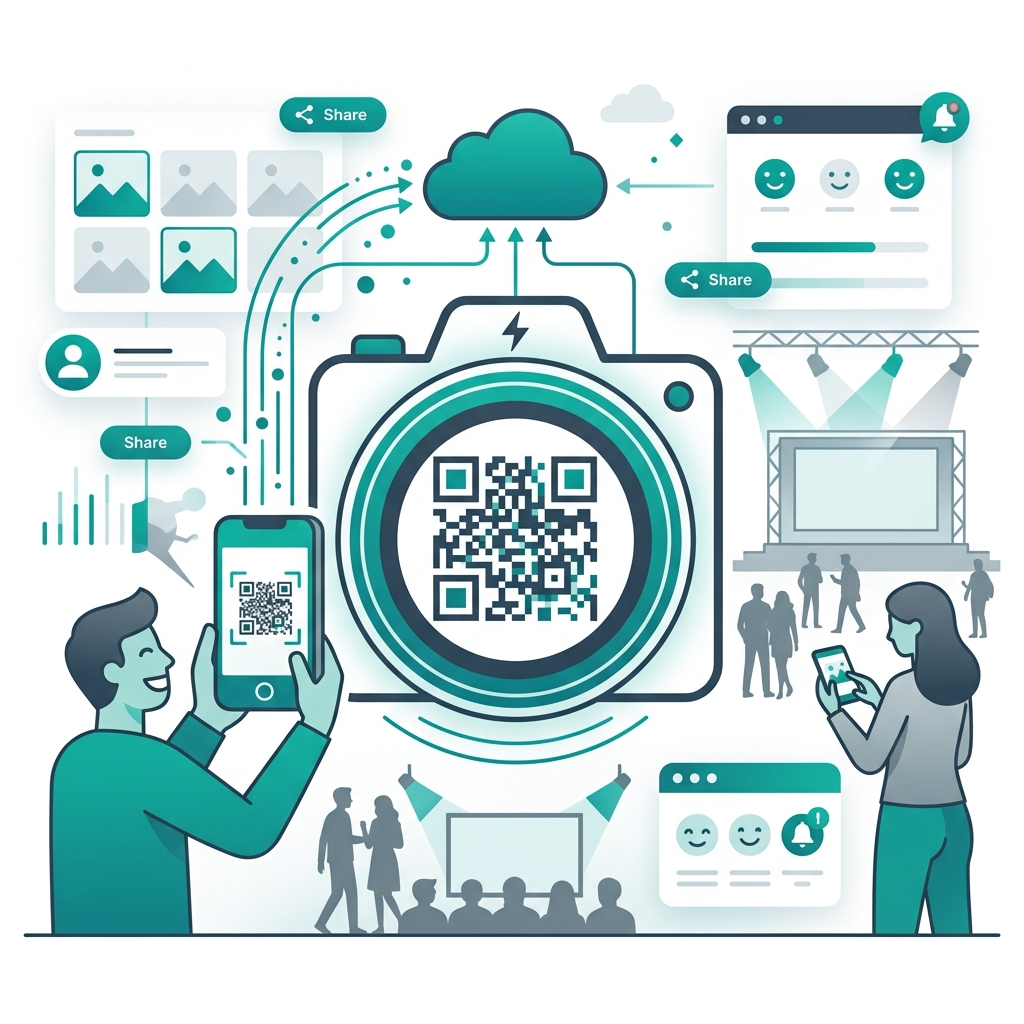
The QR code bypasses the physical typing of the URL entirely. The guest simply opens their native camera app—an action they already perform daily—points it at the code, and taps the link that appears on the screen.
In less than two seconds, they have successfully navigated from the physical world directly into your branded digital gallery.
The "Pull" Architecture and Biometric Search
Getting the guest to your website via a QR code is only the first half of the equation. If the QR code simply links them to a grid of 4,000 unorganized thumbnails, they will still abandon the gallery. You have merely shifted the friction from the URL to the scrolling interface.
The QR code must link directly to an AI-driven "Pull" architecture.
The Selfie-Search Database
When you utilize an enterprise platform like Ayojan, the QR code does not link to a folder. It links to a biometric query portal.
- The guest scans the QR code at the bar.
- The landing page (white-labeled with your studio's branding) prompts them with a single button: "Take a Selfie."
- The guest takes a live selfie.
- The Ayojan backend converts that selfie into a mathematical vector. It searches all photos for a geometric match.
- In milliseconds, the guest is presented with a personalized grid containing only their face.
The Psychological Dopamine Hit
The guest experienced zero friction. They didn't type a URL. They didn't scroll. They simply looked at their phone, and the exact, flattering, professional photos they desired magically appeared on their screen.
This creates a spike in dopamine. They are thrilled. They immediately associate that feeling of delight and technological convenience with your photography brand. This is how you generate lifelong clients.
(Curious about the tech? Check out how AI face recognition is automating the industry).
Strategic Deployment (The Physical Network)
A QR code is completely useless if nobody sees it. You cannot rely on a single piece of paper taped to the entrance of the venue. You must strategically deploy a physical network of QR codes throughout the event space, intercepting the guests at moments of downtime or high excitement.
The Table Centerpiece (The Captive Audience)
At a wedding or a corporate gala, guests spend approximately 60 to 90 minutes sitting at their tables waiting for food or listening to speeches. They are bored, and they have their phones in their hands.
You must coordinate with the event planner or florist to integrate elegant, heavy-cardstock QR codes into the table centerpieces or the printed menu cards. When the code is sitting directly in front of their face for an hour, scanning it becomes highly likely.
The Bar Standee (The High-Traffic Hub)
The highest traffic area at any event is the bar. Guests wait a few minutes to order a drink. Place high-contrast, heavy acrylic QR code standees directly on the bar top. The Copy: "Get Your Professional Photos Instantly. Scan Here."
The Lanyard Integration (B2B Events)
If you are shooting a 3,000-person tech summit or corporate conference, acrylic standees will be lost in the chaos. You must request that the corporate planner prints your custom Ayojan QR code directly on the back of every single attendee's ID lanyard. Every time they look down at their badge, or the badge of the person they are networking with, they see the gateway to your gallery.
The LED Stage Projection
For large college festivals or keynote addresses, utilize the venue's AV team. During the transition between speakers or bands, have the AV team project a large QR code onto the main stage LED screens.
When you instruct 3,000 people to hold up their phones and scan the giant screen simultaneously, you create a viral moment and guarantee near-100% adoption of the gallery platform.
The Live-Sync Magic (Real-Time Delivery)
The ultimate deployment of the QR code infrastructure is using it while the event is actively happening.
Historically, photographers placed QR codes on tables that linked to a "Coming Soon" landing page, asking guests to enter their email to be notified when the photos were ready two weeks later. This is better than nothing, but it misses the peak emotional window of the live event.
Camera-to-Cloud (C2C) Integration
To execute real-time delivery, you must bypass the SD card bottleneck.
- You connect your camera to a dedicated 5G mobile hotspot.
- You configure the camera's internal FTP settings to automatically transmit a proxy JPEG directly to the Ayojan cloud servers every time you press the shutter.
- The Ayojan AI instantly analyzes the incoming JPEG, extracts the facial vectors, and indexes the photo into the live database.
The Ultimate Guest Experience
You are on the dance floor. You pull a group of 5 friends together and take an incredible, off-camera-flash photo of them cheering.
Instead of saying, "Check the bride's Facebook next month," you hold up your smartphone (which has your custom QR code set as the lock-screen wallpaper).
You say: "That shot is incredible. Scan my phone right now."
The guest scans the phone, takes a selfie, and the exact photo you took of them five seconds ago appears on their device, perfectly watermarked with your studio logo.
They will immediately show everyone around them. They will instantly post the photo to their Instagram Story, tagging your studio. You have successfully captured the live excitement of the event and turned the guests into a viral marketing channel for your brand.
Monetizing the Traffic
When you deploy a frictionless QR network combined with biometric AI search, the volume of traffic hitting your website will be staggering. If you shoot a 500-person wedding, you will likely generate significant pageviews within 24 hours.
You must set systems to capture the economic value of this traffic.
The Email-Gated Download
The guests can use the QR code to view the heavily watermarked, web-resolution photo on their phone for free. However, when they inevitably want to download the pristine, high-resolution file to use as their LinkedIn profile picture or to print for their parents, the Ayojan platform prompts an exchange.
"Enter your email address to unlock the high-res, unwatermarked download."
Because the friction is so low and the perceived value of the photo is so high, the opt-in rate is exceptional. You extract hundreds of verified local email addresses from the event. You inject those emails into your CRM and execute automated drip campaigns to sell family portrait sessions and secure future wedding referrals.
The Hard Paywall (E-Commerce)
If you are shooting a public event (like a marathon or a music festival) where capturing long-term CRM data is less valuable than immediate cash flow, you swap the email gate for a hard paywall.
The guest scans the QR code on the festival screen, finds their photo via selfie, and is prompted to pay $9.99 for the high-res download. Because Ayojan integrates native mobile payments via Stripe, the guest authenticates with FaceID, and the transaction is routed to your bank account instantly.
The physical QR code is the most powerful bridge between the physical reality of a live event and the controlled, highly profitable digital architecture of your photography business.
If you are still relying on URLs, business cards, or the client's goodwill to distribute your media, you are operating with a severe technological handicap. By integrating QR codes directly with the fast AI facial recognition of the Ayojan platform, you completely eliminate UI friction. You deliver a magical, instant experience to the guests, you capture verified leads, and you improve the perceived value of your studio from a simple vendor to an elite media agency. Put the code in front of them, and let the AI do the work.