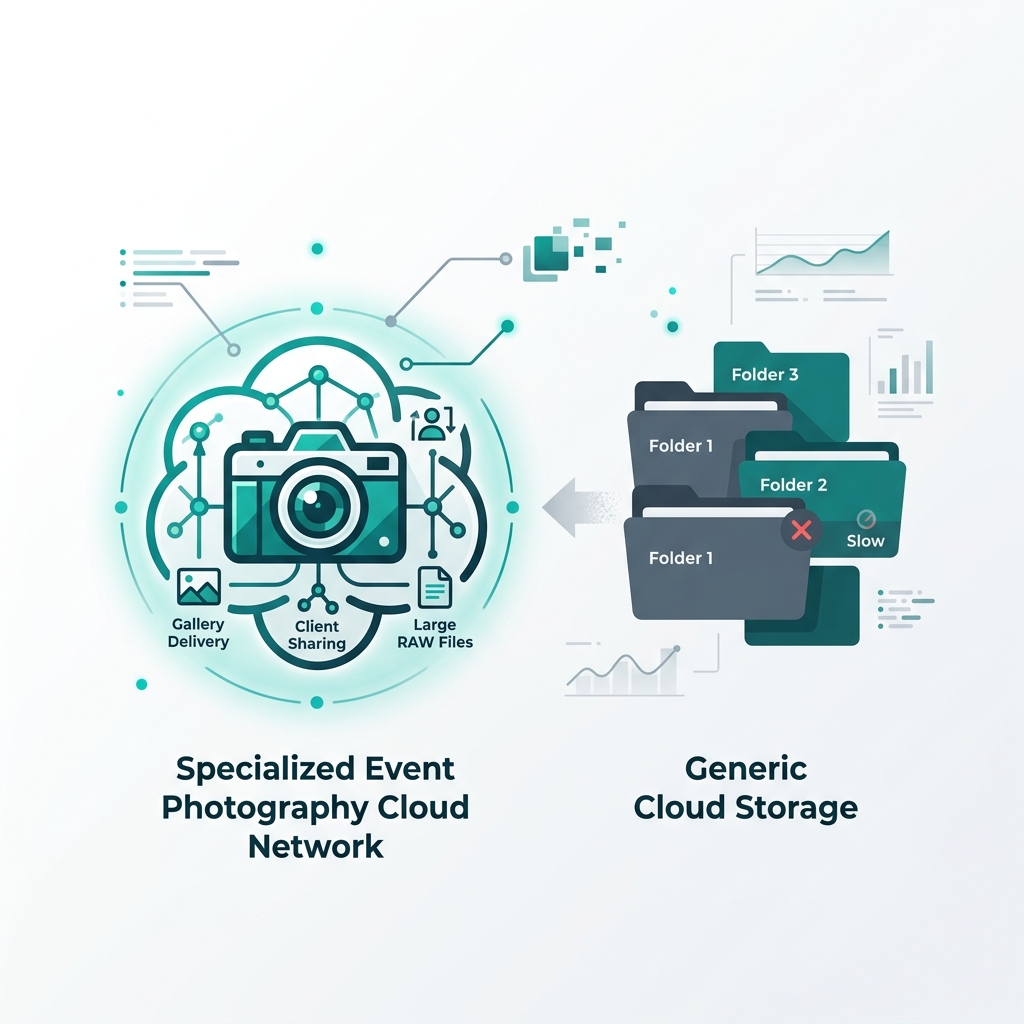
For a significant portion of the photography industry, Google Drive and standard cloud storage folders serve as the default method for delivering final images to clients. They are simple: you drag a folder of JPEGs into a browser window, generate a shareable link, and email it to the client.
For a family portrait session, this workflow is often adequate. However, if you are a professional studio shooting high-volume corporate galas or large summits, relying on Google Drive and generic folders can cause operational issues.
This guide will discuss why standard cloud storage platforms struggle when applied to large-scale event photography. We will explore the impact of UX friction on attendees and why transitioning to a dedicated delivery platform like Ayojan helps you scale your business.
Why Google Drive's UI/UX Fails at Scale
To understand why generic folders struggle as a delivery mechanism, it's important to look at what they were originally engineered to do. They are document management systems, built for collaborating on files, not necessarily for navigating thousands of visual assets.
The Mobile Browsing Experience
Imagine an attendee receiving a link containing 3,000 JPEGs. They open the link on their smartphone. The mobile interface attempts to load a large grid of thumbnails. Because it is a generic file manager, the thumbnails can be slow to populate.
The guest is forced to scroll continuously. They scroll past hundreds of photos of keynote speakers and networking sessions, trying to find a candid photo of their own team.
After several minutes of scrolling, the guest often gives up. The photographer spent hours capturing and editing the event, but the end-user may never see the final product because the delivery interface was difficult to navigate.
The Contrast with Purpose-Built Platforms
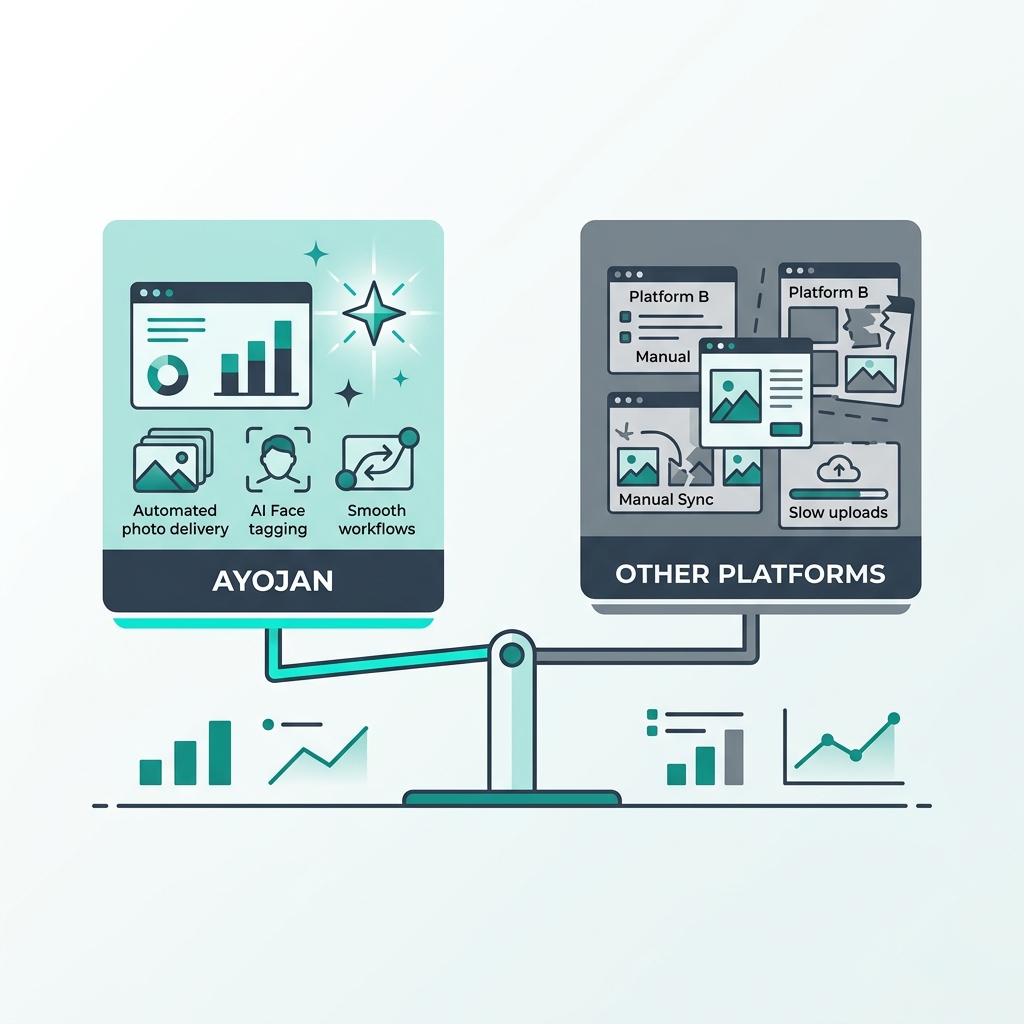
A gallery platform like Ayojan is engineered for high-volume photography. It moves away from the generic folder UI.
Instead of forcing the guest to search, the guest takes a selfie, and the AI vector engine filters the gallery down to a personalized grid of images. The UI is designed to be frictionless, and the thumbnails are optimized for mobile displays.
(Want to read more? See our guide on frictionless photo sharing).
Delivering High-Fidelity Images
Photographers carefully calibrate their monitors and adjust color temperatures to ensure their images look perfect.
When you upload those pristine JPEGs to a standard cloud drive, the client may not always see what you see.
Preview Rendering
When a client clicks on a JPEG in a standard cloud drive, the platform often generates a compressed, lower-resolution preview image on the fly to ensure it loads quickly. The rich contrast and sharp focus may appear softer in the browser.
The client is looking at a compressed version of your work. If they take a screenshot of that preview image and post it to social media, your brand is associated with that lower quality.
Native Quality Delivery
Enterprise photography platforms like Ayojan utilize specialized Content Delivery Networks (CDNs) optimized for image payloads. When a user views an image, they are served a high-fidelity rendering that respects the photographer's original export settings. When they download, they receive the exact file you uploaded.
The Administrative Burden
When a client hires you for a large corporate event, they expect a smooth experience. Delivering a generic link can sometimes offload an administrative burden onto the client.
The Distribution Problem
When the event planner receives the 4,000-photo link, they often want the attendees to have their photos. They cannot simply email the entire link to 1,000 people, as most attendees do not want to scroll through 4,000 photos of other people.
The planner might feel forced to manually download photos of key executives and send them individually.
Automated Distribution
When you pitch a client, reducing this administrative burden is a strong selling point.
You can offer a system where you provide a single QR code. The planner shares that code, attendees scan it, and the AI finds and delivers their photos to their phones. The planner doesn't have to manually sort files.
The Security Aspect
If you are shooting corporate events, using open links can present privacy considerations.
Link Sharing
In a standard workflow, security often relies on the secrecy of the URL.
If you shoot an internal corporate tech summit containing photos of unreleased product slides, and you send that link to a manager, it can easily be forwarded. The gallery is potentially accessible to anyone with the link.
Granular Access
Professional platforms utilize more precise access controls.
With Ayojan, a user must take a live selfie to view any photos. If their face is not in any of the corporate summit photos, the database returns zero results. The gallery remains inaccessible to unauthorized viewers.
The photography industry is evolving. If you want to handle larger events, protect client privacy, ensure your photos look sharp on every device, and generate leads for your business, it is worth exploring purpose-built distribution tools.
Invest in an AI-driven media distribution platform. The efficiency gains often justify the upgrade when you book corporate clients who value security and seamless distribution.