The barrier to entry in the photography industry is terrifyingly low. Anyone with a $1,500 Best Buy credit limit can purchase a full-frame camera, launch an Instagram account, and legally declare themselves a "Professional Photographer." Consequently, the market is saturated with hundreds of thousands of talented artists.
However, within three years, over 60% of these talented artists will quit the industry, sell their gear on Facebook Marketplace, and return to their corporate desk jobs.
They do not fail because their photos are bad. They fail because their administrative infrastructure is nonexistent.
The amateur photographer manages their business using a chaotic tapestry of Apple Notes, Excel spreadsheets, unread Instagram DMs, and panicked calendar alerts. When they are managing 5 clients a year, this chaos is somewhat survivable. When they attempt to scale to 40 clients a year, the system catastrophically implodes. Contracts are lost, invoices are forgotten, emails slip through the cracks, and the client experience degrades from "luxury" to "incompetent."
If you want to build a $1M+ studio, you cannot run your business out of your email inbox. You must deploy a Customer Relationship Management (CRM) platform.
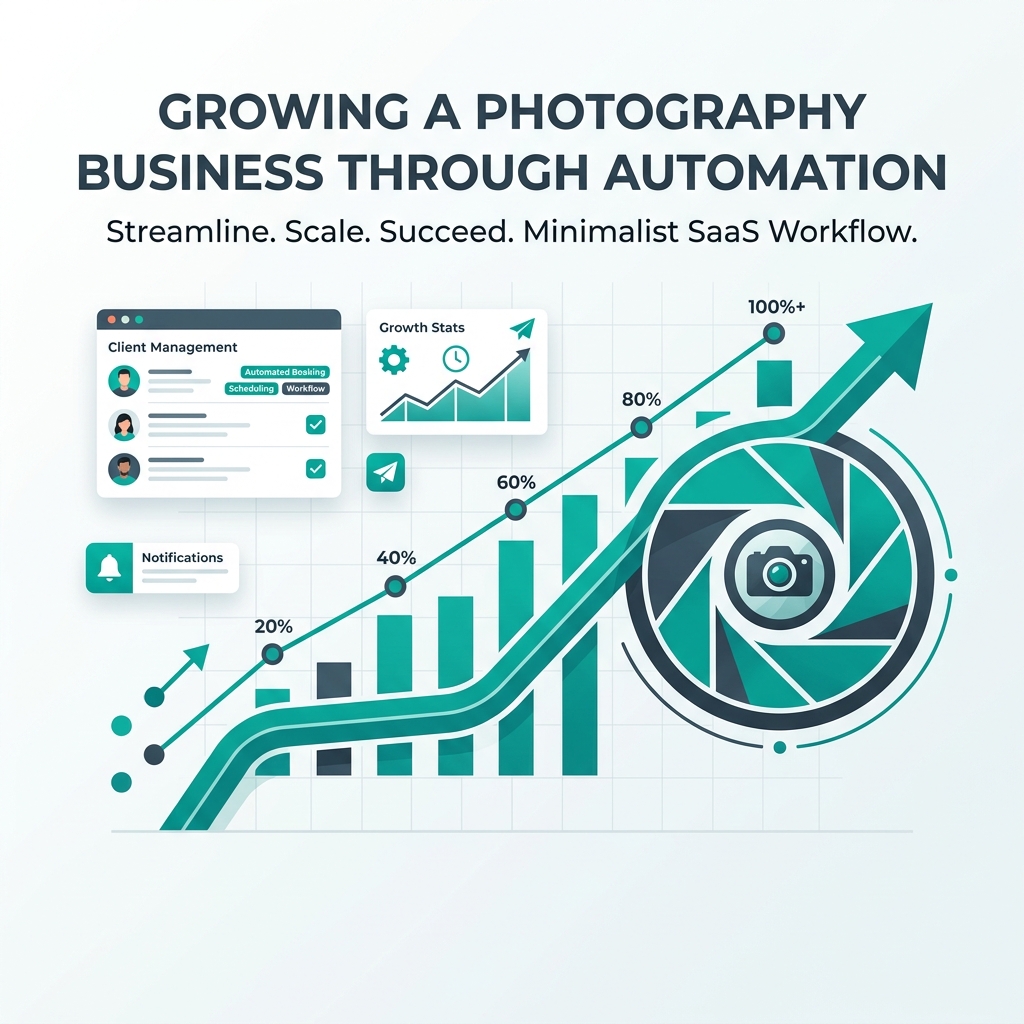
This brutal, analytical masterclass will dismantle the "sticky note" workflow. We will explore the financial cost of administrative failure, outline the exact automated onboarding sequences required to convert high-ticket leads, and explain how a CRM acts as the invisible Studio Manager that runs your business while you are asleep.
Last season, I was talking to a studio owner in Mumbai who faced this exact issue. They were losing hours every week, and it was eating directly into their margins.
Before We Dive In
If you have to manually remember to send an invoice, your business is a liability.
- The Cost of Administrative Failure: Why losing a single email thread can cost you a $5,000 retainer, and how manual tracking destroys your profit margins.
- The Automated Onboarding Funnel: How to transition a cold lead into a signed, paid, and scheduled client in under 5 minutes without typing a single email.
- The Pipeline Architecture: How a CRM visually organizes your active leads, booked clients, and delivered galleries to prevent operational bottlenecks.
- The Long-Term Nurture Sequence: How to use automated CRM drip campaigns to convert a one-time wedding client into a lifelong, recurring revenue stream.
(Also, you might find our insights on this topic useful).
The Cost of Administrative Failure
Many photographers resist purchasing a CRM (like HoneyBook, Dubsado, or Studio Ninja) because it costs $40 a month. They view it as an unnecessary expense, believing they can manually track their business for free using Google Sheets.
This is a failure to understand the concept of Opportunity Cost.
The Lost Lead
Imagine you are shooting a 12-hour wedding on a Saturday. At 2:00 PM, a high-net-worth bride fills out the contact form on your website. The inquiry hits your email inbox. Because you are shooting, you cannot reply. You finish the wedding at midnight, exhausted. On Sunday, you sleep. On Monday morning, you open your inbox, see the inquiry, and type out a manual reply.
By the time you hit "Send" on Monday at 10:00 AM, forty-four hours have passed. The high-net-worth bride has already hired a different photographer who replied to her within 5 minutes.
Because you tried to save $40 a month on a CRM, you just lost a $6,000 contract.
The Professional Perception
When you operate manually, your administrative friction bleeds into the client experience. If a client asks to book you, and you reply: "Great! Can you Venmo me the $500 deposit, and I'll send you a PDF contract to print, sign, scan, and email back to me?"
You look like a hobbyist. A corporate CMO or a luxury bride does not want to use Venmo, and they certainly do not want to find a printer. They are accustomed to frictionless, enterprise-grade transactions. When your onboarding process is clunky, the client subconsciously assumes your photography delivery process will be equally clunky. You destroy their trust before you even pick up the camera.
The Automated Onboarding Funnel
A modern CRM entirely eradicates the administrative friction of the booking process. It acts as an invisible, highly efficient Studio Manager that works 24/7/365.
The Instant Response
Let's replay the Saturday wedding scenario, but this time, your studio is powered by a CRM.
At 2:00 PM, the bride fills out the contact form on your website. Within 3 seconds, the CRM detects the incoming lead and triggers an automated "Auto-Responder" email.
The Automated Email: "Hi [Client First Name]! Thank you so much for reaching out about your wedding on [Event Date]. I am currently out of the office shooting an event, but I wanted to get this information over to you immediately. Attached is my comprehensive Investment Guide. If everything looks good, you can click the link below to select a time for a quick Zoom consultation next week!"
The Frictionless Checkout
The bride reads the PDF guide on Saturday afternoon and loves your work. She clicks the Calendly link embedded in the email and books a Zoom call for Tuesday.
After the Zoom call on Tuesday, she says, "We want to book you." You do not send a PDF. You click one button in your CRM: "Send Proposal."
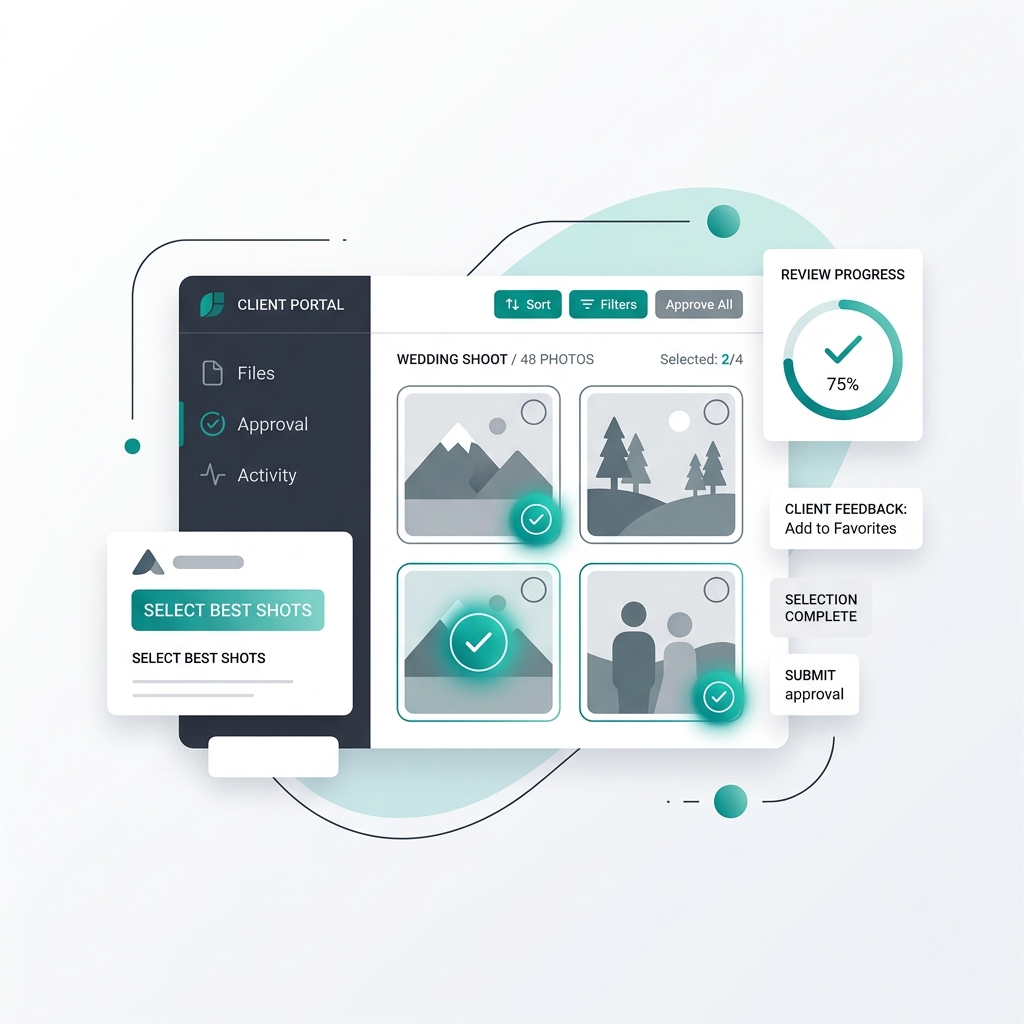
The CRM automatically generates a stunning, branded web portal for the client.
- The Proposal: The client reviews the $6,000 package details.
- The Contract: On the next screen, they digitally sign the legally binding contract using their mouse or finger.
- The Invoice: On the final screen, they are presented with the $2,000 retainer invoice. The CRM integrates natively with Stripe. The client types in their credit card, and the money is instantly routed to your bank account.
The entire process took the client 3 minutes. It took you exactly zero seconds of administrative labor. You provided a flawless, luxury onboarding experience that justified your premium price tag.
(Want to dive deeper? Check out our guide on related workflows).
The Pipeline Architecture
When you are managing 40 weddings and 20 corporate events a year, keeping track of where every single client is in their specific lifecycle is impossible for the human brain.
Did the Smiths pay their final balance? Did I send the questionnaire to the Johnsons? Have the Davis photos been delivered yet?
If you manage this in a spreadsheet, you will inevitably forget to collect a final payment, or worse, you will forget to show up to an engagement session.
The Kanban Board
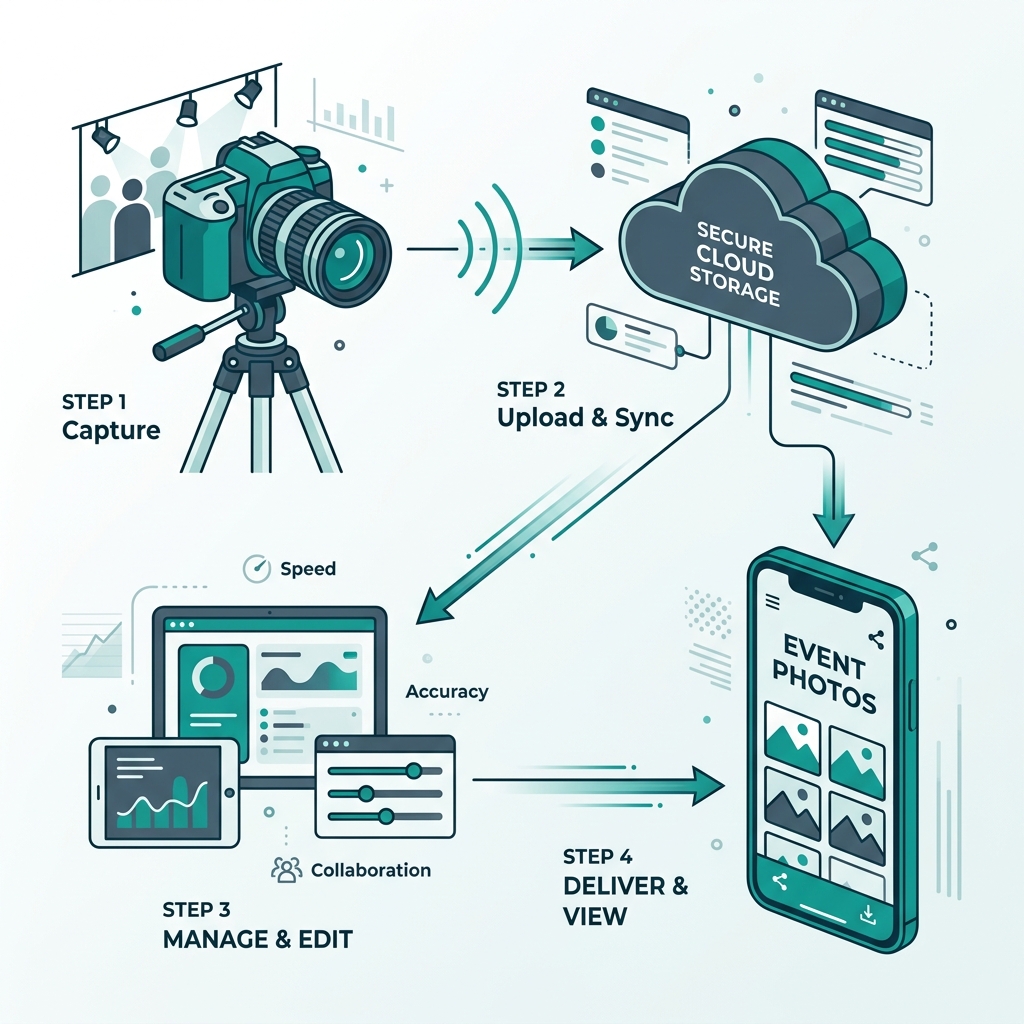
A CRM solves this via visual Pipeline Architecture (often modeled as a Kanban board). Every client exists as a "Project Card." The board is divided into distinct columns representing the lifecycle of an event:
- New Inquiry: Leads that need to be qualified.
- Consultation Scheduled: Leads you are actively speaking with.
- Proposal Sent: Waiting for the contract to be signed.
- Booked / Retainer Paid: The event is officially on the calendar.
- Questionnaire Sent: Gathering timeline details 30 days before the event.
- Final Balance Due: Waiting for the last payment 14 days before the event.
- Post-Production: The event is shot, waiting for AI culling and editing.
- Gallery Delivered: The Ayojan biometric gallery is live.
The Executive Overview
Every morning, you open your CRM and look at the Pipeline. You instantly know the exact health of your business. You see three cards in the "Final Balance Due" column. You do not have to manually email those clients; the CRM has already sent them automated reminders: "Hi Sarah, your final balance is due in 3 days. Click here to pay."
You see four cards in the "Post-Production" column. You know exactly what your workload is for the week. The Pipeline eliminates administrative anxiety by providing absolute, real-time clarity.
The Questionnaire and Timeline Automation
One of the most disastrous situations for an event photographer is arriving at a wedding or a massive corporate gala without a concrete timeline. If you do not know exactly where you are supposed to be, or exactly which family members need to be photographed, you will miss critical shots and the client will be furious.
Amateurs attempt to gather this information via disjointed email chains. "Hey, what time is the ceremony again? Also, what are the names of your grandparents?"
The 30-Day Automated Trigger
With a CRM, this data collection is entirely automated and standardized.
Exactly 30 days before the event date, the CRM automatically sends the client a comprehensive digital Questionnaire. The Questionnaire forces the client to fill out the exact addresses of the venues, the contact information of the event planner, the specific shot list they require, and the names of all VIPs.
The Centralized Hub
When the client completes the form, the data is automatically saved directly into their Project Card in the CRM. When you are driving to the event on Saturday morning, you do not have to dig through your email inbox trying to find an address they sent you three months ago. You simply open the CRM app on your phone, click the client's project, and the entire timeline and questionnaire are instantly accessible in one centralized hub.
You appear infinitely more organized, prepared, and professional than the photographer who is frantically texting the bride on the morning of her wedding.
The Long-Term Nurture Sequence (LTV)
The true power of a CRM is not just managing active clients; it is monetizing past clients.
As discussed in our sales masterclasses, increasing the Lifetime Value (LTV) of a client is the key to massive profitability. If you shoot a wedding and never speak to the couple again, you are operating a failing business model.
The Anniversary Drip Campaign
You cannot manually remember the anniversary of every couple you have ever photographed. A CRM never forgets.
You build an automated "Drip Campaign" (a sequence of emails triggered by a specific date).
- 11 Months Post-Wedding: The CRM automatically emails the couple: "Happy almost-anniversary! I'm opening up my Fall Mini-Sessions. Click here to book a spot to celebrate your first year of marriage."
- 3 Years Post-Wedding: The CRM automatically emails the couple: "I've been photographing so many of my past couples as they start their families. If you are expecting, I'd love to offer you a legacy discount on a maternity session!"
The Referral Machine
The CRM can also automate your referral network. One week after the Ayojan biometric gallery is delivered, the CRM sends an automated email: "I hope you are loving your photos! If you had a great experience, the biggest compliment you can give my studio is a review. Click here to leave a 5-star review on Google. Also, if you know any engaged friends, forward them my contact info! For every referral that books, I'll send you a $100 Amazon Gift Card."
You are passively generating 5-star Google reviews (which drastically boosts your Local SEO) and passively building a massive referral pipeline, all without typing a single word.
Wrapping Up Stop Being an Assistant
The photography industry is littered with exhausted artists who are desperately trying to juggle 50 spinning plates at once. They are acting as their own secretary, their own accountant, their own scheduler, and their own marketing department.
You cannot scale a $1M+ media empire if you are spending 6 hours a day manually typing out emails and generating PDF invoices.
A CRM is not an optional luxury; it is the foundational operating system of your business. By deploying platforms like HoneyBook or Dubsado, you completely eradicate the friction of the onboarding funnel. You visually organize your massive operational workload. You standardize your data collection. And you automate the long-term nurture sequences required to turn one-time clients into lifelong revenue streams.
When you offload the administrative chaos to the machine, you finally free yourself to step into the role of the CEO. Stop acting like an entry-level assistant, and start running your business.