For decades, event photographers have operated under a flawed assumption: they believe their primary job is solely to take photos.
Taking beautiful, technically sound photos is merely the baseline expectation. It is the absolute minimum requirement for entry into the professional market. A significant part of the value of an event photographer—the value that dictates your pricing—is your ability to distribute those photos seamlessly to the people who want them.
If you shoot a large corporate gala, you can take the most stunning candids. But if you cannot figure out how to get the specific photo of the CFO into the hands of the CFO without causing a logistical issue for the event planner, your stunning photo loses its impact. It will sit on a hard drive, unseen and unshared.
This guide covers modern photo distribution. We will analyze the limitations of legacy sharing methods, explain the architecture of high-speed AI vector matching, and provide a blueprint for deploying frictionless, instant delivery systems at large events.
The Failure of the "Push" Model
To solve the distribution problem, you must understand why old methods often fail. Traditional photography relies on a "Push" architecture. The photographer tries to push the data outward to the users.
Failure 1: The Physical Business Card
In the early 2010s, the standard method for sharing photos with guests was handing out physical business cards. You take a photo of a group of friends on the dance floor, and you hand them a card that says, "Find your photos at yourstudio.com/smithwedding in 4 weeks."
This is a logistical challenge. First, the guest is socializing; they may easily lose the card. Second, even if they keep the card, they are not always going to remember to type that exact URL into their browser four weeks later. The emotional excitement of the event has often faded.
Failure 2: The Client as the Middleman
When the business card method failed, many photographers shifted the burden to the client. You send the 4,000-photo cloud drive link to the corporate planner or the bride, and you expect them to push the link to the guests.
The bride emails the link to 500 guests. The guest clicks the link and is confronted with a grid of 4,000 thumbnails. They are forced to manually scroll, trying to find their own face. This creates UI friction. After a few minutes of scrolling, many get frustrated, close the browser, and never look at the photos again.
Relying solely on "Push" architecture is slow, prone to human error, and creates an administrative burden.
The "Pull" Architecture (AI Selfie-Search)
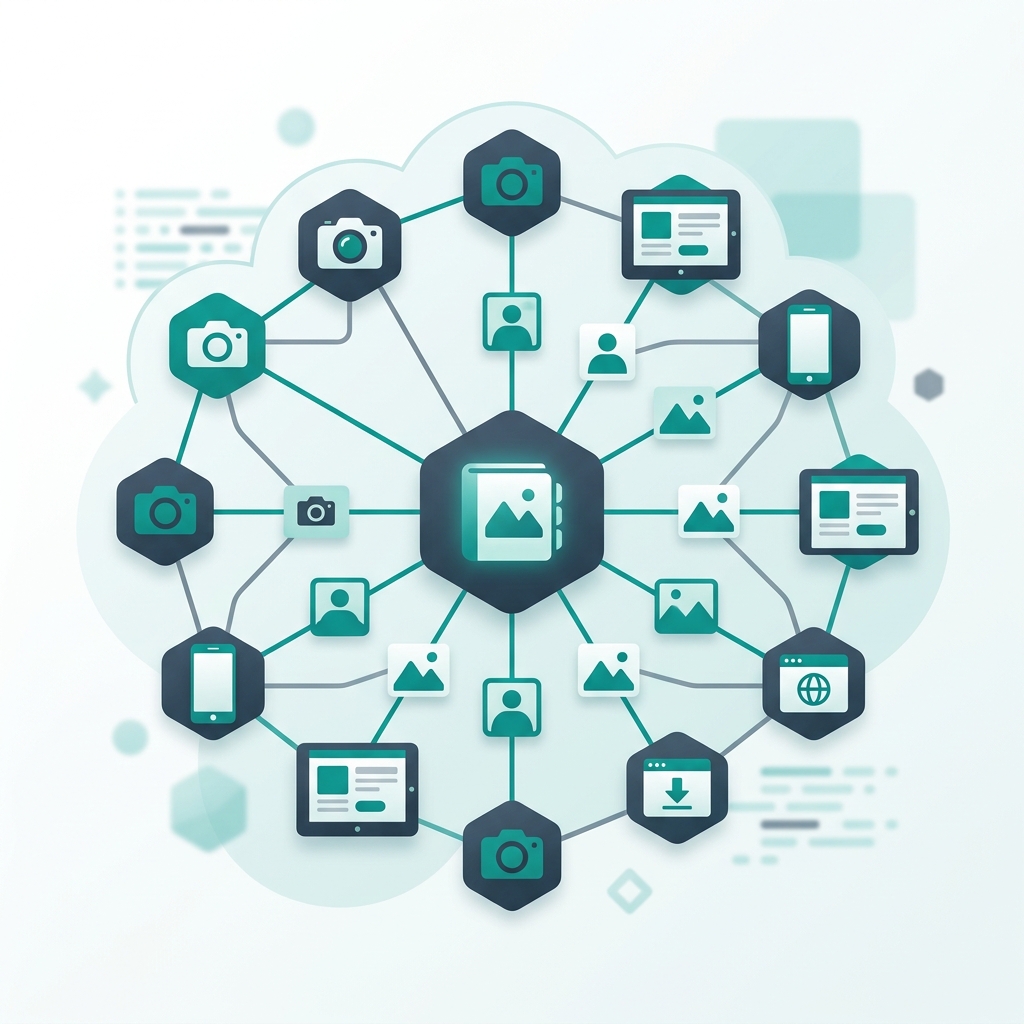
An effective way to successfully distribute media to thousands of people is to build a "Pull" architecture. You host the data in a centralized, highly accessible location, and you provide the guests with a frictionless tool to instantly "pull" their specific data out of the collection.
This tool is Artificial Intelligence Facial Recognition.
How the Math Works
When you use a platform like Ayojan, you are not just building a folder of JPEGs; you are building a dynamic mathematical database.
- You upload the event photos to the Ayojan cloud.
- The AI scans the images, detects human faces, and extracts the structural geometry of each face into a vector array.
- These vectors are mapped into a High-Dimensional Space.
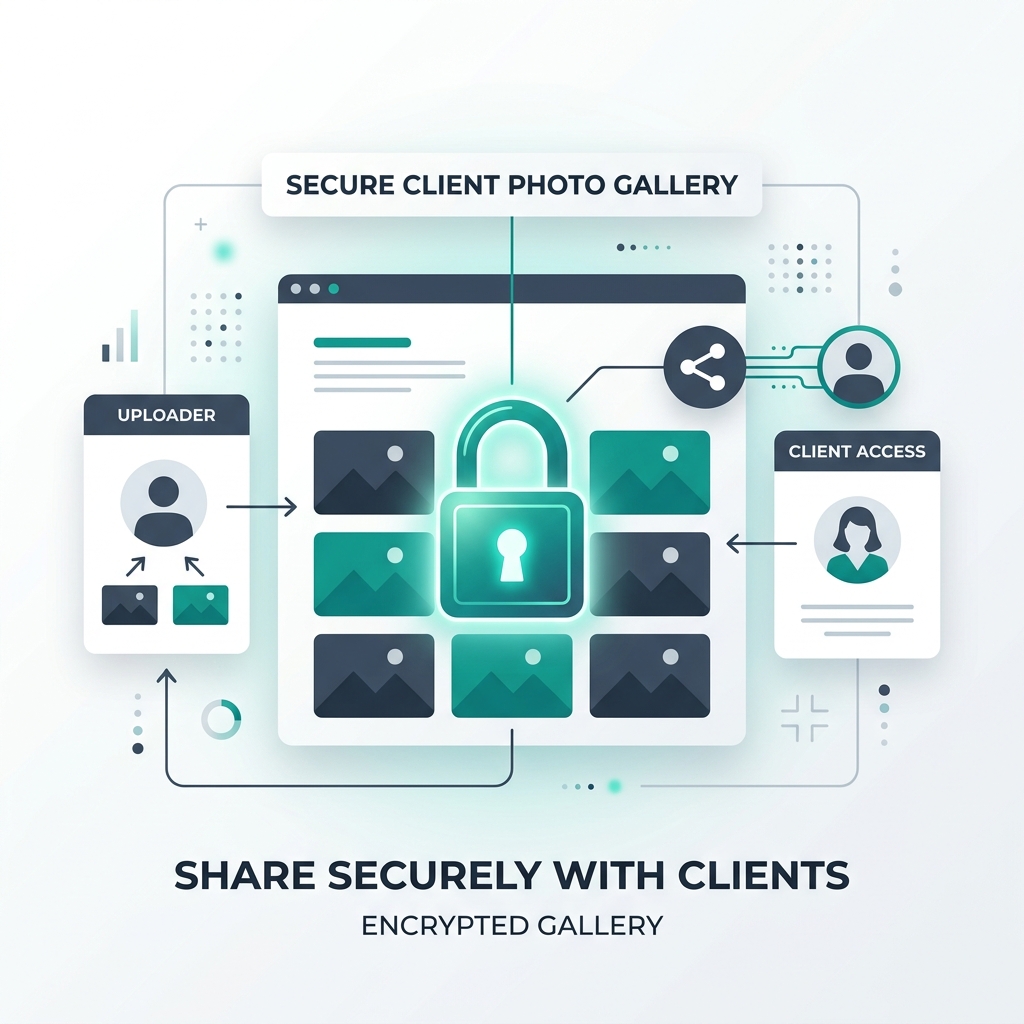
When a guest wants their photos, they do not scroll. They access the gallery via a secure, encrypted private link sent by the event organizer. They are prompted to authenticate by taking a live selfie. The system instantly converts their selfie into a "Query Vector." It then drops that Query Vector into the graph. Using nearest neighbor algorithms, the database locates the specific cluster of vectors that mathematically match the guest's face.
This entire process—from snapping the selfie to the database returning the exact photos the guest is in—takes roughly 45 to 60 milliseconds.
The Frictionless Experience
The guest experiences a streamlined flow. They didn't have to remember a URL four weeks later. They didn't have to scroll through 4,000 photos. They simply looked at their phone, and the exact photos they desired appeared on their screen in high resolution.
By shifting from a Push model to an AI Pull model, you solve the distribution bottleneck.
(Want to learn more? Read our guide on guest sharing at weddings).
Deploying the Private Link Strategy
The AI software is highly effective, but it is less useful if the guests do not receive their access point. You must deploy a strategic digital communication plan.
1. Pre-Event Registration
The easiest place to capture a guest's attention is before they even arrive.
- The RSVP Email: Work with the corporate planner to embed the secure private link into the initial RSVP confirmation email.
- The Calendar Invite: Include the link in the official calendar invite payload. When guests want to see their photos, they naturally check the invite for details.
2. The Mega-Event (SMS and Apps)
If you are shooting a corporate summit or a 3,000-person festival, email might get lost.
- SMS Integration: Coordinate with the event's communication team. Send out an SMS blast to registered attendees on the final day containing the secure gallery link.
- Event App: Embed the private link directly into the official event mobile app under a dedicated "Photos" tab.
3. The Security Perimeter
Unlike generic cloud folders, secure links act as an authentication gateway. Because the link requires a live selfie to unlock personalized photos, the link itself can be distributed widely without compromising the privacy of high-profile attendees. If an unauthorized person clicks the link, their selfie returns zero results.
The Secure Real-Time Delivery Pipeline
A significant advancement in photo distribution is making the photos available while the event is still happening.
As detailed in other guides, you can implement Camera-to-Cloud (C2C) workflows.
The Real-Time Pipeline
You connect your camera to a dedicated mobile hotspot. You configure the camera to automatically FTP proxy JPEGs directly to the Ayojan servers every time you press the shutter.
The Ayojan AI analyzes the incoming JPEGs, extracts the facial vectors, and indexes them in real-time.
When you tell a guest to scan your screen on the dance floor, they take the selfie, and the photo you took of them moments ago appears on their phone.
Why Real-Time Matters
This is how you encourage immediate social media sharing. If you wait two weeks to deliver the photos, the guest's emotional high has faded. They might save the photo, but they are less likely to post it. If you deliver the photo to them while they are still at the event, they will often immediately post it to their Instagram Story, tagging the host and your studio. You are capturing the peak of their excitement and converting it directly into visibility for your brand.
Monetizing the Distribution Network
Once you have successfully deployed the QR codes and funneled guests into your white-labeled Ayojan gallery, you can utilize that traffic.
B2B: Lead Generation
If it is a corporate event, the distribution network can act as a lead generation funnel. To download the high-resolution photos, the attendees must enter their email address. Because the delivery is instant, the opt-in rate is usually high. You can export this database of verified emails and provide it to the corporate client, which adds significant value to your service package.
B2C: Digital Downloads
If it is a public event, a marathon, or a cultural festival, you can monetize the guest downloads directly. The guest uses the selfie search and finds their photo. They can view a low-resolution, watermarked version for free. But right below the image is an option to purchase the high-res file.
Because they found the photo instantly, the conversion rate is solid. You can automate the payment via Stripe, generating passive revenue.
The days of mass-emailing standard cloud drive links and hoping the client distributes them efficiently are passing. It creates administrative challenges and reduces the reach of your work.
By building a "Pull" architecture utilizing Ayojan’s AI facial recognition, and deploying a network of secure private links, you remove friction and ensure enterprise-grade security. You deliver photos instantly, capture leads, and transform your photography service into an interactive software experience.